A pipeline built on referrals can go quiet fast, while random cold outreach burns time without giving buyers a reason to reply. These outsourced sales development services take different routes: signal-based prospecting, appointment setting, or dedicated sales roles.
Here are six options, including em8, and the kind of sales team each one may suit.
Table of Contents
- em8
- Belkins: Appointment setting with a deliverability focus
- SalesRoads: US-based appointment setting with a boutique model
- memoryBlue: Dedicated SDR, ADR, and AE teams
- SalesCaptain: Prospect lists built around intent and company data
- demandDrive: Tailored sales development programs
- How the outsourced sales development options compare
- FAQ
- Conclusion
1. em8
em8 runs signal-based B2B outbound. Each week, you get companies with a reason to buy now, the right person to contact, and a personal intro written in your company’s voice. The signals can include job posts, leadership hires, tech stack details, building permits, planning applications, and other public records.
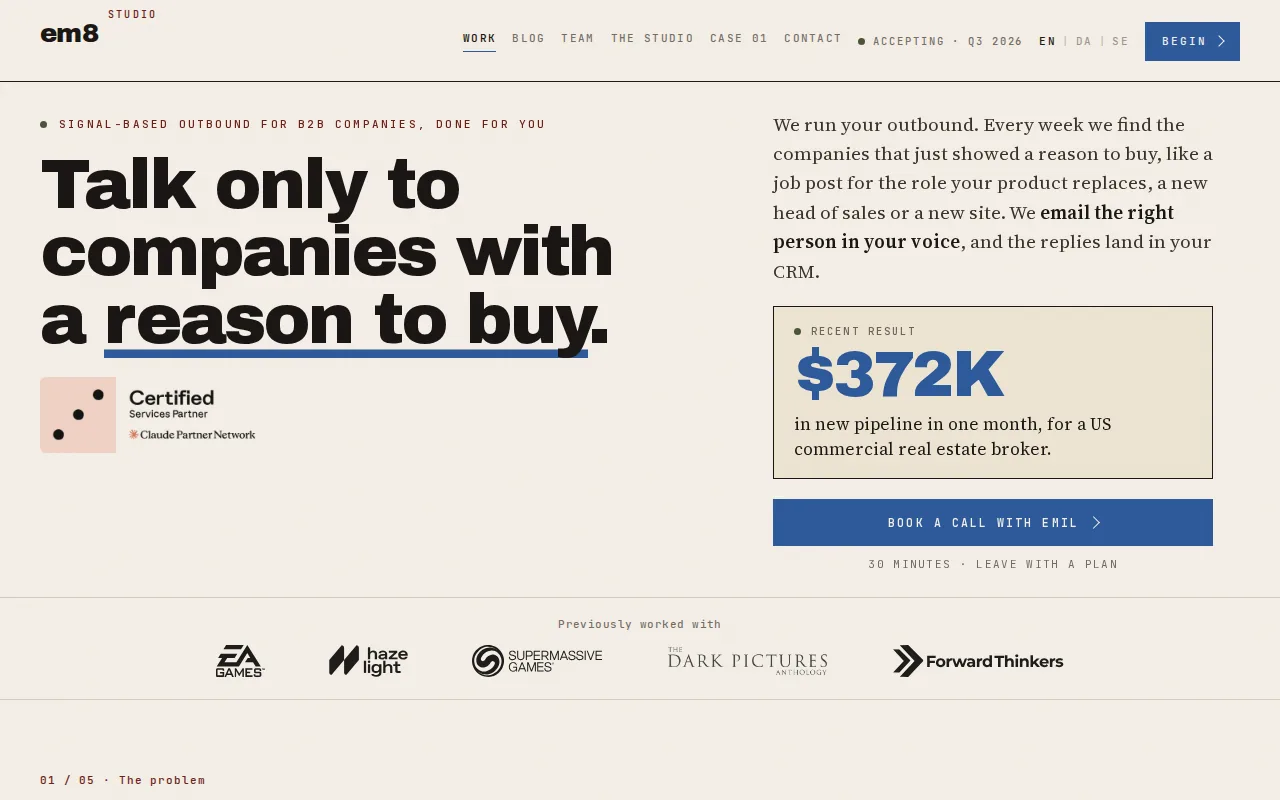
That makes em8 a fit for founders and sales leaders who are moving beyond referrals and manual prospecting. It’s also built for industrial sellers whose demand can follow construction and facility activity, including manufacturers, distributors, equipment sellers, building-products firms, and commercial contractors.
The difference is the starting point. A broad prospect list says who might fit your market. A signal-based list adds a current reason to reach out. If a company is hiring its first sales rep, for example, you can write to the person responsible for that decision instead of sending the same note to every firm in the sector.
I’d use that distinction when you assess any provider. Ask what makes an account timely, who checks that signal, and how the signal changes the opening message. em8’s guide to turning buying signals into pipeline covers how those choices affect targeting and outreach.
em8 also builds custom AI and automation systems for B2B sales teams. That can matter when your team has a working process but too much manual work around it. The service is centered on weekly signal-based outbound, while the AI work is a separate area of support, not a reason to assume every task is automated.
One em8 outbound program brought in $45K in deal value during its first live week. Treat that as one client result, not a promise for your team. Your market, offer, list quality, and follow-up still shape the outcome.
For teams that need a steadier flow of relevant accounts, em8 is the option I’d assess first. You can see the service on em8’s site and judge whether its weekly handoff fits your sales rhythm.
Key Takeaway: Choose em8 when timing and account relevance matter more than sending a large, generic list.
2. Belkins: Appointment setting with a deliverability focus
Belkins is an appointment-setting and lead generation agency that also offers deliverability consulting. It may suit a B2B team that wants outside help with lead qualification, outreach, and meeting booking rather than a weekly signal list alone.
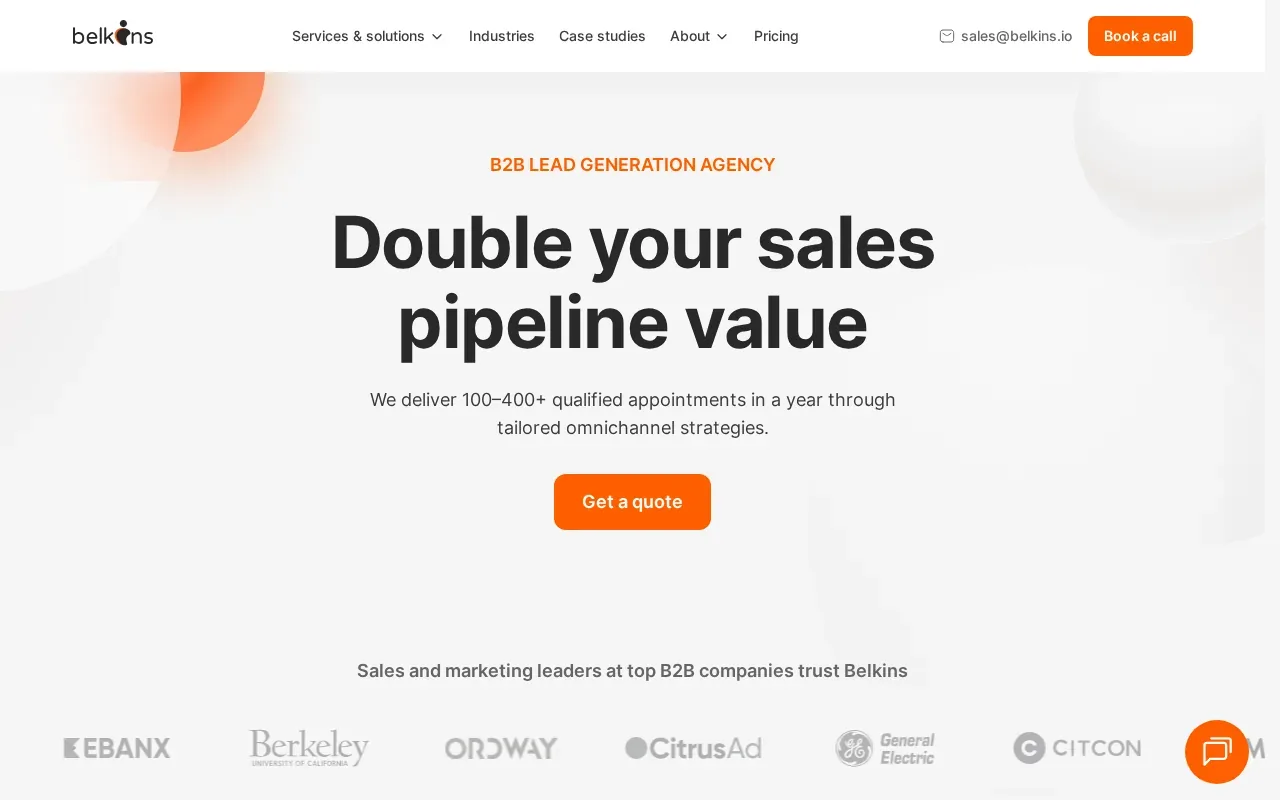
Its services cover cold email, cold calling, LinkedIn outreach, and lead research. Belkins also runs follow-ups so prospects attend the meetings booked with your sales team.
Deliverability is part of the pitch. That’s relevant if outbound emails are landing in spam or campaign performance shifts after a change in sending setup. Belkins offers deliverability consulting as its own service.
For you, the key question is what counts as a qualified appointment. Agree on the target role, company fit, and evidence of interest before launch. Then ask how the provider handles a meeting that doesn’t show or turns out to be outside your target. A booked slot is useful only if your sales team can act on the context behind it.
Belkins works with enterprise, SMB, and startup clients. That range may make it worth considering if your team needs an appointment-setting program and a deliverability focus. It’s a different model from choosing accounts because of a fresh public signal.
Also check how campaign reporting connects to your day-to-day decisions. A weekly report should help you see which messages and audience groups produce qualified conversations. Make sure your team can use the report to adjust targeting, not just count activity.
Belkins is worth a closer look when booked meetings are the main output you’re buying. Set a clear definition of a qualified meeting before you compare proposals.
3. SalesRoads: US-based appointment setting with a boutique model
SalesRoads is a B2B appointment setting and lead generation firm based in Boca Raton, Florida, with a remote team. Its services include outbound calling, outbound email, list building, and SDR outsourcing, so it’s a potential fit for companies that want a phone-led approach.
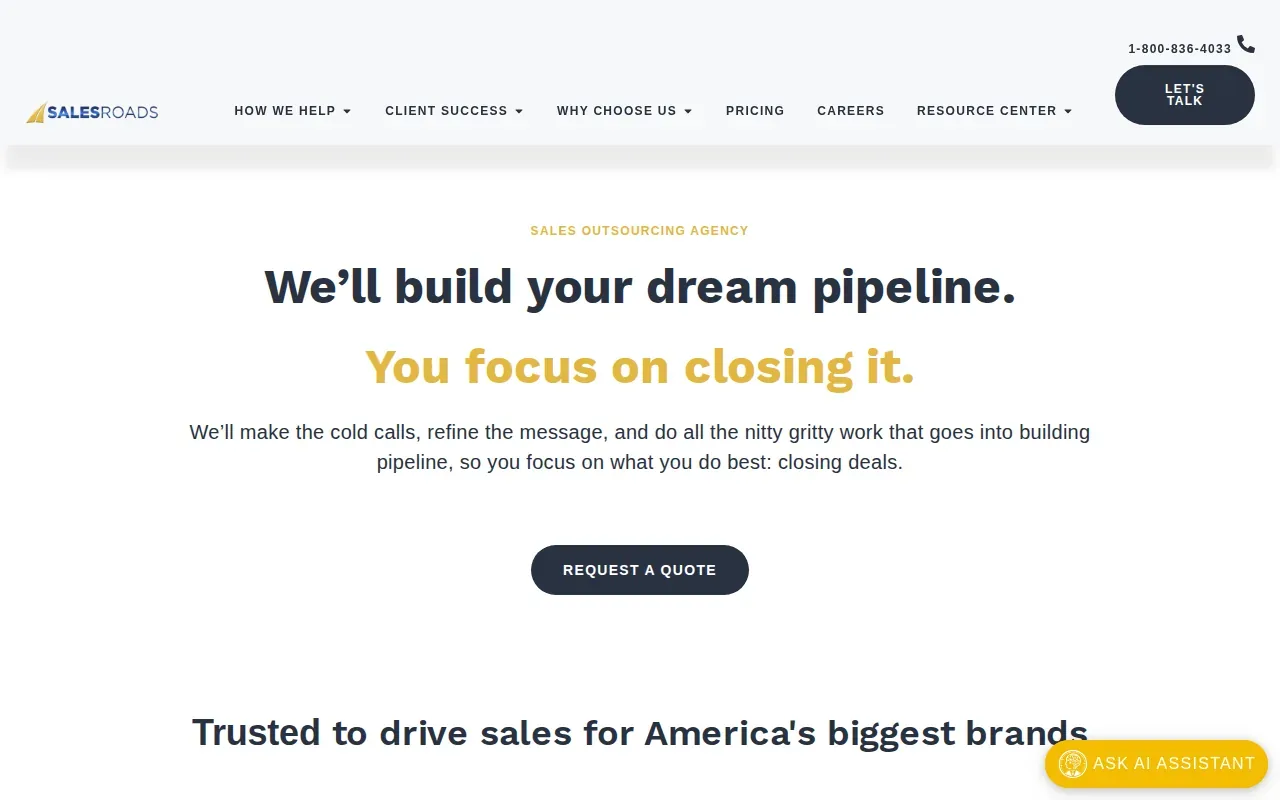
That focus can be useful when buyers are more likely to respond to a call than to another email sequence. Before you sign, get specific about how phone work fits your sales motion. Ask who owns the first call, how a rep records the result, and what information your account executive receives after a prospect shows interest.
For an industrial seller, the handoff may need more than a meeting time. A rep might need to note the facility or project that prompted interest, the person involved, and what the buyer wants to discuss. Agree on those fields in advance so the sales team isn’t left piecing context together from a calendar invite.
SalesRoads lists industries such as manufacturing, healthcare, SaaS, and federal, state, and local government. If your buyers are in those sectors and you want reps on the phone, it belongs in the conversation. If your main need is to identify accounts around public construction or facility signals, compare that requirement directly with the provider’s proposed research process.
Remote delivery also puts more weight on shared routines. Decide how your team will review campaign progress, raise changes to the target market, and pass product updates to the reps. A short, regular review can prevent the provider from using a message that no longer fits your offer.
Use SalesRoads as a candidate when phone-first appointment setting is central to the job. Be clear about the work that happens before the call and the sales context that must reach your closer afterward.
4. memoryBlue: Dedicated SDR, ADR, and AE teams
memoryBlue is a B2B sales outsourcing company that helps businesses build and scale revenue teams. Its services include dedicated SDR, ADR, and AE teams, so it may fit a company that needs sales capacity across more than the top of the funnel.
The roles cover different points in a deal. SDRs prospect and book qualified meetings. ADRs work after the first meeting to qualify or nurture opportunities. AEs can handle discovery, proposals, negotiation, and closing. You can consider one role or connect several, depending on where your in-house team has a gap.
That role-based model can help when the problem isn’t simply a shortage of leads. Imagine that your sales reps book initial calls, but nobody has time to keep slower opportunities moving. An ADR function could address that gap. If the issue is that qualified opportunities stall during discovery or proposal work, the AE role may be the more relevant part of the scope.
memoryBlue works with industries such as cybersecurity, data analytics, professional services, fintech, public sector, and GovTech. It’s a candidate for companies that want to add sales roles without hiring every person in-house.
Before buying a larger team, map the handoffs. Who owns the account before the first meeting? Who updates the CRM after qualification? When does an AE take control? If two teams both think the other one owns a follow-up, the prospect can sit untouched even when each group is doing its assigned work.
Keep the first scope tied to a clear operating problem. A dedicated team can add capacity, but you still need an agreed target market and a sales process the team can follow. The best starting point is the role that removes the biggest current bottleneck.
memoryBlue deserves consideration when you need dedicated sales roles beyond appointment setting. It’s especially relevant if your goal is to scale a revenue team rather than buy one isolated outbound task.
5. SalesCaptain: Prospect lists built around intent and company data
SalesCaptain builds prospect lists using a client’s target niches along with intent, funding, and revenue data. It may suit teams that want company-level data to shape their outbound list, then want help with messaging and automated responses.
It adds more than 250 data points when building lists, and it uses ChatGPT and generative AI to automate responses. Treat those as separate parts of the offer: the list helps decide who to target, while response automation affects how the campaign handles replies.
SalesCaptain integrates with HubSpot, Salesforce, and other major CRMs. That connection is worth checking in a live workflow discussion. Ask which fields move into the CRM, where replies appear, and whether your team has to copy key details by hand after a prospect responds.
Its service includes multichannel LinkedIn, email, and text campaigns. If your team is considering several channels, set a clear job for each one. For example, decide which channel starts the conversation and which one follows up. Without that rule, a prospect may get repeated messages from different parts of the sequence.
SalesCaptain runs an outbound scaling process, and its team provides weekly and monthly insights. Ask what a report lets you change. Useful reporting should connect list quality to replies and qualified interest, so you can decide whether to adjust the audience or the message.
Intent and company data can help make a list more selective, but the signal still needs to match your offer. Ask what qualifies as intent for your target market and how recently the data is checked. A signal that’s broad or stale can make a well-built campaign feel generic.
SalesCaptain belongs on your shortlist when data-led list building and multichannel outbound fit the job. Make sure your team agrees on what the data means before it turns into a sequence.
6. demandDrive: Tailored sales development programs
demandDrive runs SDR and BDR programs for outbound prospecting and inbound lead qualification. It also offers appointment setting, opportunity qualification, and proposal support, so it may suit a company that wants several sales-development functions from one provider.
demandDrive also offers revenue operations work, including CRM automation and lead routing. That can matter when sales activity is happening but the records are hard to use. If the CRM has inconsistent stages or leads fall between teams, adding more outreach may create more noise. Ask what gets fixed before activity starts and who will keep the workflow current.
If sales engineers take over after qualification, agree on what they need before the first call. Strong discovery and value framing can shape later deal talks; a resource on negotiation training for sales engineers may help your team think through that later handoff.
demandDrive is a fit to assess when you want a tailored program that may span several sales-development functions. Ask how the first scope will address your specific bottleneck, and what your team must own week to week.
How the outsourced sales development options compare
These options differ most in what they take off your team’s plate. Some focus on account timing or appointment setting. Others provide dedicated roles or a wider program. Compare the work itself, not just the label on the proposal.
| Option | Best fit | What to confirm before launch |
|---|---|---|
| em8 | Weekly prospecting built around buying reasons and personal intros | Which signals matter, and how your team will use the weekly handoff |
| Belkins | Appointment setting with email deliverability support | What makes a meeting qualified and how no-shows are handled |
| SalesRoads | US-based, phone-first appointment setting for named sectors | How calls are logged and what context reaches your closer |
| memoryBlue | Dedicated SDR, ADR, or AE capacity | Which role owns each stage and how account handoffs work |
| SalesCaptain | Prospect lists shaped by intent and company data | How signals are defined and how campaign data enters your CRM |
| demandDrive | Tailored sales development programs across several functions | What gets fixed first and which work stays with your team |
Outsourcing makes the most sense when your offer and target buyer are clear, but your team lacks time or a specific skill. It won’t fix a weak offer or an unclear ideal customer profile on its own. If your team still debates who to target, settle that question before a provider starts sending messages.
Ask each provider to define the scope in plain terms: the work they own, your team’s part, the output you’ll review, and how a change gets approved. Compare the full commitment in each proposal, including setup, term length, renewal, and what happens to campaign records when work ends. Don’t assume those terms are alike.
For ROI, set a baseline before launch. Track progress from target account through response, qualified conversation, meeting, opportunity, and closed business. Review lead quality with sales, not only the number of touches or meetings. A calendar full of poor-fit calls can cost your closers time without adding useful pipeline.
The handoff matters too. Pick one CRM owner and agree which fields must be updated. If you’re mapping repeatable tasks before launch, sales automation templates can help your team think through which steps need a standard workflow.
Pro Tip: In week 1, review a small set of target accounts together. Check fit, signal, message, and CRM handoff before you judge campaign volume.
Automation claims are not the same as a connected sales process. Some providers offer automation, while others offer integrations. Ask for a walk-through of what happens after a reply, including where the record lands and who must act next.
For a broad process fit, demandDrive may be worth scoping. For dedicated roles, assess memoryBlue. If the job is signal-led weekly prospecting, em8 is the clearest match among these options.
FAQ
What does outsourced sales development include?
Outsourced sales development can include prospect research, outbound outreach, qualification, appointment setting, or dedicated sales roles. The scope varies by provider. Before you sign, ask who finds accounts, who contacts them, what makes a lead qualified, and who follows up after a reply. Those details show whether you’re buying meetings, rep capacity, or a wider sales program.
When should a B2B company outsource sales development?
A B2B company should consider outsourcing when its target buyer and offer are clear, but its team lacks the time or role capacity to run prospecting consistently. It’s a poor fix for an unclear market or a weak message. Start by naming the exact work that is not getting done, then compare providers built to own that work.
How do I measure an outsourced SDR team?
Measure progress across the full path from target account to closed business. Track fit and reply quality before meeting volume, then review whether meetings become qualified opportunities. Agree on CRM fields and a reporting rhythm before launch. This gives your sales team a way to spot poor targeting early, instead of waiting until the pipeline review.
Is a signal-based outbound service different from appointment setting?
Yes. Signal-based outbound starts with a reason an account may be ready to buy, then uses that context to shape the outreach. Appointment setting focuses on moving prospects toward meetings. The two can overlap, but they solve different problems. Ask whether the provider builds timing into account selection or begins with a broad list and focuses on booking calls.
Can I combine outsourced and in-house SDRs?
Yes, a hybrid model can pair outside capacity with an internal sales team. Define who owns account research, messaging changes, CRM updates, and follow-up before work begins. If you plan to bring roles in-house later, capture the process as it runs. That makes the handoff more useful than simply transferring a list of contacts.
Key Takeaway: Choose a provider around the work you need done, then set clear rules for quality, handoffs, and reporting.
Conclusion
If your pipeline depends on referrals or untargeted outreach, I’d start by assessing em8’s signal-based weekly service. It gives your team a reason to contact each account and a personal intro to work from. Book a call with Emil to discuss whether that approach fits your sales motion.
Book a call with Emil.
30 minutes. Leave with a plan for reaching decision makers at the moment they have a reason to buy.