
A full calendar can still hide a weak pipeline: booked meetings don’t tell you if the right buyers are ready to talk. The best outbound sales agencies give you a clear way to reach and qualify those buyers. Here are six options, with em8 first for teams that want outreach tied to a reason to buy now.
Table of Contents
- em8
- CIENCE: Managed outbound for mid-market volume
- SalesRoads: Outsourced SDR teams
- SalesCaptain: Multichannel outreach for B2B SaaS
- Belkins: High-volume appointment setting
- Martal: Global coverage with onshore reps
- Compare the Outbound Sales Agencies at a Glance
- Frequently Asked Questions
- Conclusion
1. em8
em8 runs signal-based B2B outbound for companies that need a steadier flow of relevant accounts. Each week, you get companies with a reason to buy now, the right person to contact, and a personal intro written in your voice. The signals can include hiring, leadership changes, tech stack details, building permits, or planning applications.
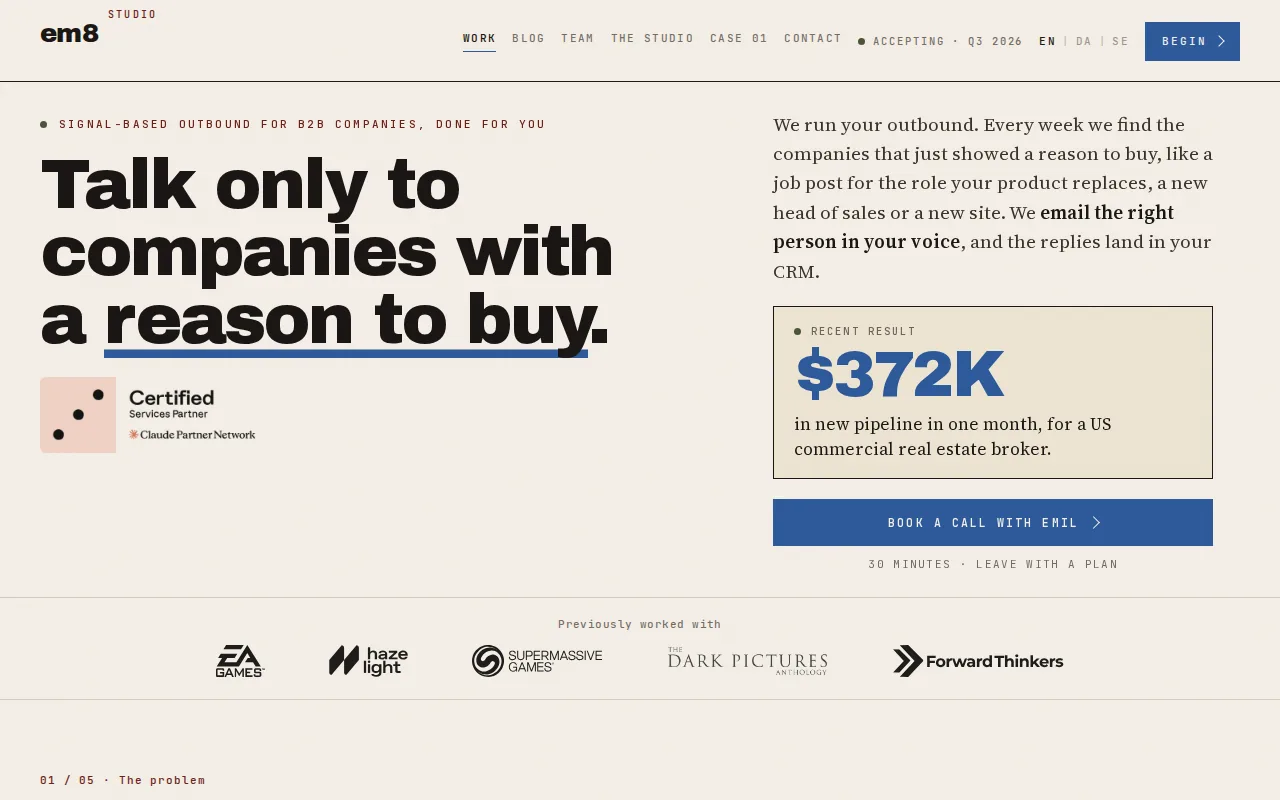
This model fits founders hiring a first SDR or sales leaders taking over a pipeline built mostly on referrals. It also fits industrial sellers whose demand follows construction and facility activity. Instead of asking a rep to work through a broad list, the weekly handoff gives them a reason to start with a specific account.
One outbound program we built from zero brought $45K in deal value in its first week live. I founded em8 after 20+ years in growth, including running my own outbound agency. I’d look closely at the weekly account list and intro quality before judging the program by raw outreach volume alone.
See how em8 structures signal-based outbound if you want to judge whether that weekly deliverable fits your team. A signal only helps when your rep can act on it quickly.
Key Takeaway: Pick em8 when timing and account relevance matter more than sending the largest possible list.
2. CIENCE: Managed outbound for mid-market volume
CIENCE is a managed outbound provider whose SDRs work inside its own graph8 platform. Pricing is built per SDR: offshore SDRs start at $1,750 per SDR per month and US or Europe SDRs at $3,500, plus a $2,000 monthly campaign team fee and $499 per month for the platform. Ask what work and capacity sit inside the exact proposal, rather than compare the top-line quote alone.
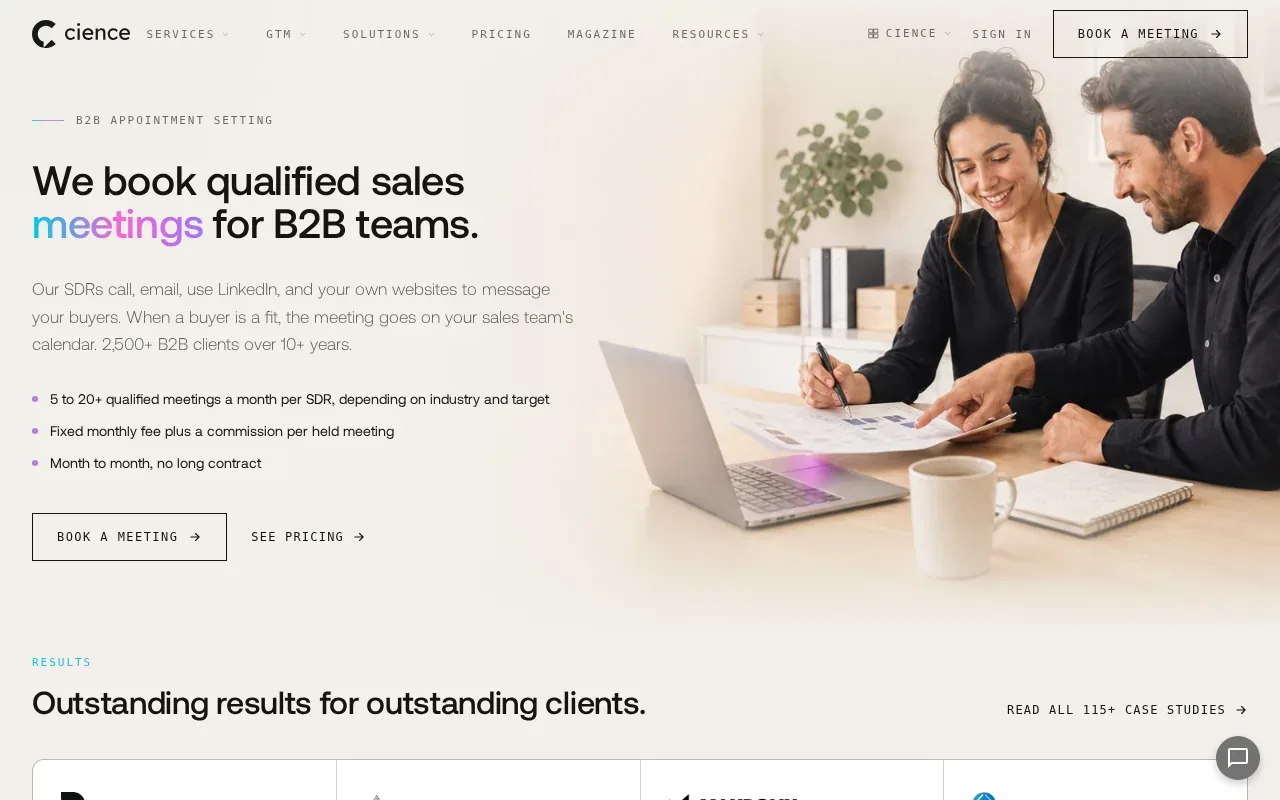
CIENCE may suit a mid-market team that wants managed outbound and a provider-owned data system. A company buying outbound help is paying for a way to identify and reach prospective buyers, not simply for a database.
Before signing, ask what your team will see each week: account selection, contact details, outreach status, and replies. Then ask how the team marks a lead as qualified. A large list has little value if your account executives spend their time sorting out fit after the handoff.
CIENCE is the volume-oriented pick here. Match its proposed workload to the number of conversations your closers can handle.
3. SalesRoads: Outsourced SDR teams
SalesRoads, based in Boca Raton, Florida, builds outsourced SDR teams for appointment setting and lead generation. It may fit a team that wants outside SDR capacity while keeping sales leadership and closing inside the company.
Before comparing that spend with an in-house hire, define what the SDR will own. Is the assignment to find target accounts, start conversations, qualify interest, or set meetings? Those are different jobs. A proposal should say which work is included and what your own team must handle after a prospect responds.
Also ask what happens when a prospect is interested but not ready to meet. A useful qualification process should record the buyer’s timing and next step, rather than treating every positive reply as a calendar booking. That gives your account executive context for follow-up.
Read the contract terms and confirm what happens if the first months miss your targets before you make SalesRoads part of your cost comparison.
4. SalesCaptain: Multichannel outreach for B2B SaaS
SalesCaptain is an outbound marketing and go-to-market agency built for B2B companies, with a dedicated B2B SaaS practice. It runs multichannel LinkedIn, email, and text campaigns and integrates with HubSpot, Salesforce, and other major CRMs.
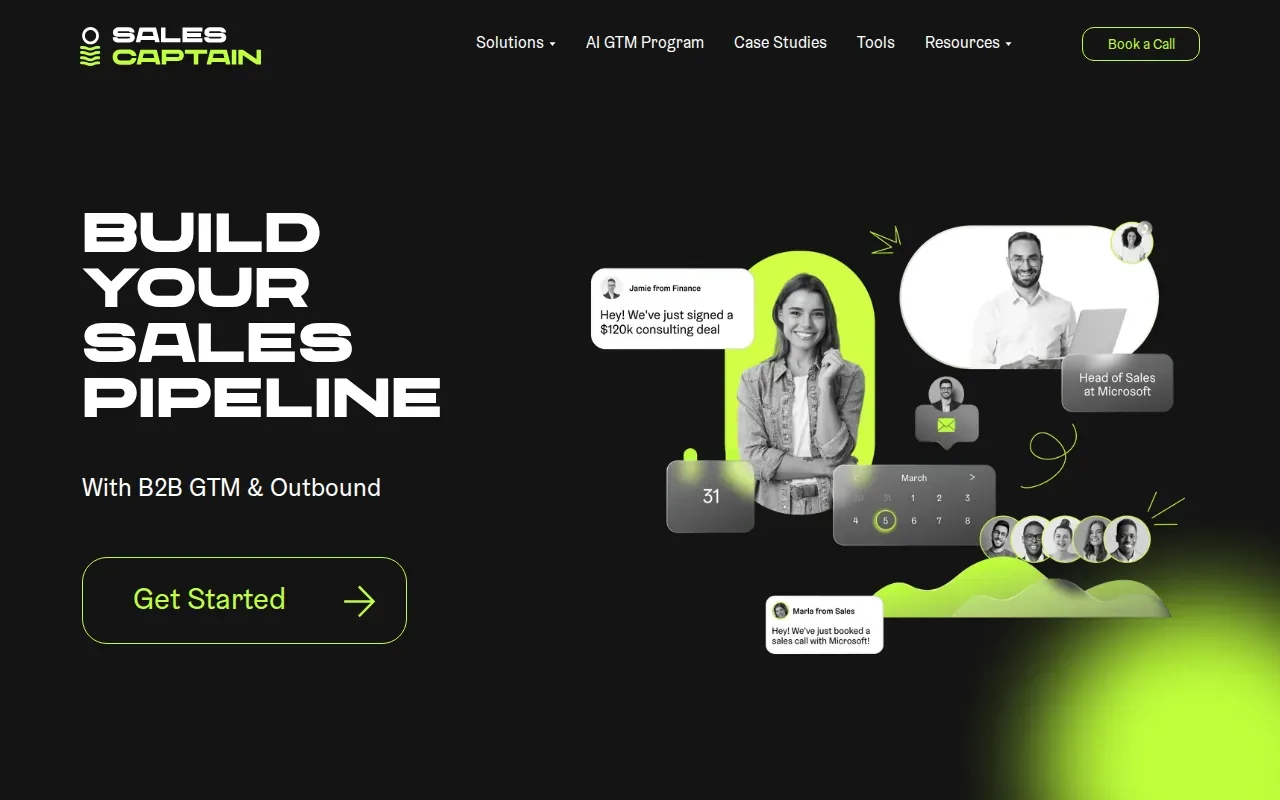
That mix may suit a SaaS team that wants outreach to reflect account intent rather than rely only on a static prospect list. Ask how the agency defines a useful signal for your product. A hiring post could matter to a sales-enablement vendor, for example, but mean little to a company selling equipment to construction firms.
Ask what data moves into your CRM and how your team sees replies and next steps. A multi-touch cadence is only useful when each touch adds context. If the email, social message, and follow-up call repeat the same generic pitch, more channels just mean more noise.
Keep the first message brief and tied to the event that prompted it. The goal is to open a relevant conversation, not cram the full product pitch into one note.
5. Belkins: High-volume appointment setting
Belkins focuses on appointment setting, and its site shows a 4.9 score on Clutch. That makes it a candidate for teams that want appointment setting as a central part of the engagement.
Set a shared definition of a qualified meeting before launch. It should cover who needs to attend, what account fit means, and what information the agency must capture. Otherwise, a meeting count can rise while your sales team spends more time disqualifying prospects.
Ask how the agency reports on the path from first touch to held meeting. Track the quality of conversations alongside activity. Email volume and calls show that work happened; replies and qualified conversations show whether the work is reaching the right people.
Belkins is worth considering when your team can respond to a steady flow of appointments. If your closers have little calendar space, agree on capacity before asking an agency to increase outreach.
6. Martal: Global coverage with onshore reps
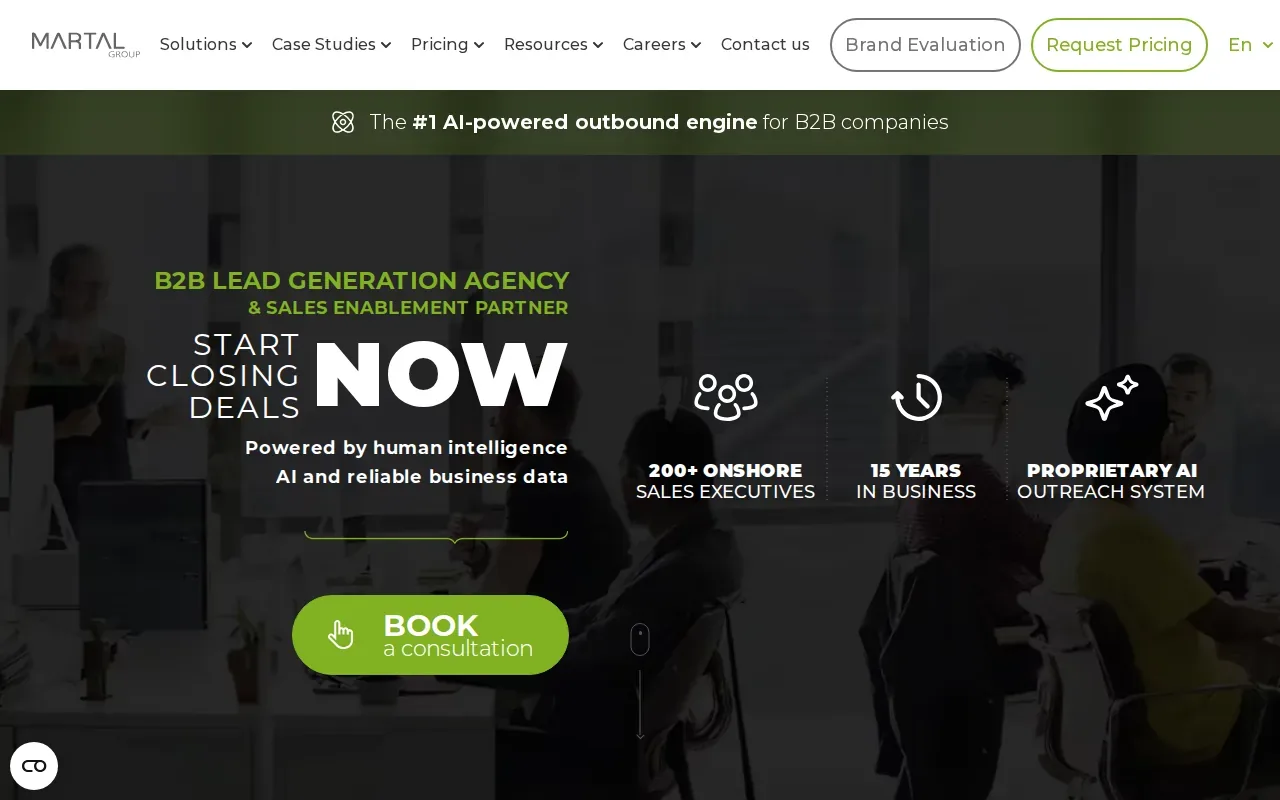
Martal runs B2B lead generation with a team of 200+ onshore sales reps based in the EU, North America, and LATAM. It starts with a pilot campaign of three or four months, then moves to a flat monthly fee, with a sales commission added on some tiers. That combination may appeal to a team selling across markets that wants onshore sales support.
Ask which regions and buyer groups your proposed team will cover. “Global” can mean different things in a sales plan, so name the markets, time zones, and languages that matter to your pipeline. Then check that the proposed reporting shows activity by market, not only a single combined total.
Speed matters after a prospect replies, too. Decide who owns the next response and how quickly your team can follow up. A thoughtful first touch loses force when an interested buyer waits days for a reply or can’t find a suitable meeting time.
Martal’s onshore-rep model gives you a point to test in the sales plan: ask who will work your accounts and how the handoff works.
Compare the Outbound Sales Agencies at a Glance
The right partner depends on the bottleneck. If your team lacks a timely reason to contact an account, a signal-led model may fit. If you need outside SDR capacity or appointment setting, compare the proposed work, handoff, and reporting before you compare activity totals.
| Agency | Best fit | Pricing context | Question to ask |
|---|---|---|---|
| em8 | Weekly account list tied to buying reasons | Ask about the scope for your program | Can reps act on the weekly signals? |
| CIENCE | Managed outbound with its own data platform | From $1,750 per offshore SDR per month, plus team and platform fees | What workload and reporting are included? |
| SalesRoads | Outsourced SDR teams | Ask for the scope in the proposal | What work is included in the proposal? |
| SalesCaptain | Multichannel outreach for B2B SaaS | Ask for the scope in the proposal | Which buyer signals trigger outreach? |
| Belkins | High-volume appointment setting | Ask for the scope in the proposal | How is a qualified meeting defined? |
| Martal | Global coverage with onshore reps | Pilot campaign, then a flat monthly fee (plus commission on some tiers) | Who covers each target market? |
Build the cost comparison around the full sales path. Include the agency fee, any internal time needed for list approval or follow-up, and the share of meetings that become qualified opportunities. Don’t use a cost-per-meeting figure on its own; it can hide weak fit or poor attendance.
CRM handoffs can also decide whether outsourced work turns into usable pipeline. If the sales process depends on reliable records and follow-up, review CRM automation flows for sales pipelines before setting the agency’s reporting requirements.
Questions to settle before you sign
- What account and contact criteria define a good target?
- Which channels will the agency use, and what is the planned cadence?
- What counts as a qualified conversation or meeting?
- Which CRM fields will be updated, and who owns the next step?
- What are the contract term, renewal, and exit conditions?
Pro Tip: Ask for a sample weekly report before kickoff. It should help you see the account, the buying reason, the contact, and the next action without digging through activity logs.
Frequently Asked Questions
How much do outbound sales agencies cost?
Most agencies quote per engagement. CIENCE publishes per-SDR pricing, starting at $1,750 per offshore SDR per month plus a $2,000 campaign team fee and a $499 platform fee. Martal starts with a pilot campaign, then charges a flat monthly fee, plus a sales commission on some tiers. Compare each proposal’s scope and your team’s follow-up work, not just the monthly fee.
What should an outbound sales agency report?
An agency should report whether outreach reached the right accounts and produced useful conversations. Ask for account fit, replies, qualification notes, meetings held, and the next step in your CRM. Activity counts can help explain the work, but they don’t show whether a buyer is qualified or moving through your sales process.
Should I outsource outbound sales or hire an SDR?
Outsourcing can suit a team that needs prospecting capacity without building the whole function internally. An in-house SDR may fit when you need a person closely tied to product feedback and daily sales work. Compare management time and the work your closer can absorb, then decide who should own list quality, messaging, and follow-up.
What makes signal-based outbound different?
Signal-based outbound uses a reason to contact an account now, such as a relevant job post or a leadership change. The signal gives the message context and helps a rep choose which account to work first. It still needs a good-fit company, a relevant contact, and a prompt follow-up to turn a trigger into a conversation.
How do I compare outbound agency performance?
Compare results using the same definitions across proposals. Agree on what counts as a qualified conversation, a held meeting, and a sales opportunity. Then review the path from outreach to pipeline, including how quickly your team responds. This prevents a high meeting count from looking better than a smaller set of well-qualified conversations.
Conclusion
If your pipeline depends on referrals or manual prospecting, start by checking whether an agency can give your reps a timely reason to reach each account. For a weekly, signal-led workflow, book a call with Emil to discuss fit and the next step.
Book a call with Emil.
30 minutes. Leave with a plan for reaching decision makers at the moment they have a reason to buy.